
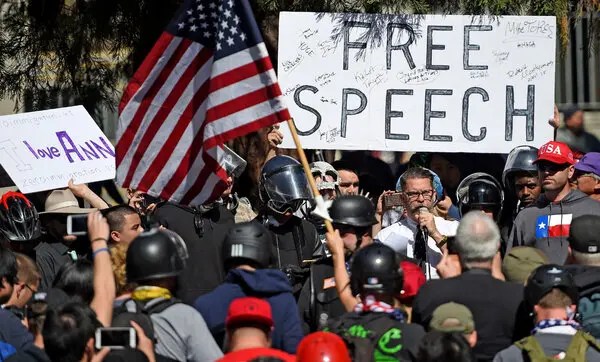
College campuses, once bastions of open inquiry and intellectual rigor, have increasingly become battlegrounds where civil debate is sacrificed at the altar of ideological conformity. The lack of constructive dialogue, particularly the targeted attacks on conservative students and ideas, reveals a troubling trend: a growing intolerance for differing viewpoints, especially among liberal students who perceive conservative beliefs as inherently threatening.
This phenomenon not only stifles free expression but also undermines the very purpose of higher education—to challenge assumptions and foster critical thinking.
The targeting of conservatives on campuses often manifests in overt hostility. Conservative speakers, when invited, are frequently met with protests, shout-downs, or disinvitations. In 2019, at UC Berkeley, a conservative student group faced significant backlash for hosting an event with a prominent right-leaning commentator, requiring extensive security measures.
Such incidents are not isolated; they reflect a broader pattern where conservative voices are silenced through intimidation or administrative capitulation. Conservative students report feeling ostracized, self-censoring to avoid social repercussions or academic penalties. A 2021 survey by the Foundation for Individual Rights in Education (FIRE) found that 66% of college students felt some ideas should be censored, with conservative viewpoints often the primary target.
Why do many liberal students feel threatened by conservative beliefs? The answer lies partly in the echo chambers of modern campus culture. Many students enter college already steeped in progressive ideologies, reinforced by social media and peer groups.
Conservative ideas—whether on issues like immigration, free speech, or traditional values—can seem alien or even morally reprehensible to those unaccustomed to engaging with them. For example, a conservative stance on limited government or Second Amendment rights might be misconstrued as an endorsement of systemic oppression or violence, rather than a principled position worthy of debate.
This mischaracterization is fueled by a lack of exposure to nuanced conservative arguments, often replaced by caricatures that paint conservatives as bigoted or dangerous.
This sense of threat is compounded by the framing of discourse as a moral battleground. Many liberal students view their beliefs as not just correct but righteous, casting dissent as not merely wrong but harmful. This mindset, often reinforced by faculty and campus policies, creates a climate where questioning progressive orthodoxy is equated with complicity in oppression.
The concept of “safe spaces” has been weaponized to exclude conservative perspectives, with the justification that such ideas could “trigger” or “harm” students. While emotional safety is important, this approach often conflates discomfort with danger, shutting down opportunities for growth through disagreement.
The consequences are dire. When conservative students are shouted down or ostracized, it signals that only one worldview is permissible. This not only alienates conservatives but also deprives liberal students of the chance to refine their own beliefs through rigorous debate. True intellectual growth requires grappling with opposing views, not silencing them. Moreover, the lack of civil discourse fuels polarization, as students graduate without the tools to engage constructively with those who hold different values.
To restore civil debate, campuses must prioritize free speech and intellectual diversity. Administrators should enforce policies that protect all viewpoints, not just those aligned with the majority. Faculty can model respectful disagreement, encouraging students to engage with ideas they find challenging.
Student organizations should host debates that bring conservative and liberal voices together, fostering dialogue rather than confrontation. Most importantly, students must be taught that feeling threatened by an idea is not a reason to suppress it but an invitation to engage with it critically.
The crisis of civil debate on college campuses is not just a conservative issue; it’s a societal one. If we cannot teach the next generation to argue, listen, and learn from those they disagree with, we risk a future where division triumphs over understanding. It’s time to reclaim the university as a place where ideas are tested, not banned.


 Veteran's Voice: Unfiltered Truth
Leave a comment